
Your cart is empty. Let's change that!
Shop our productsOops! Something went wrong while submitting the form.
.webp)
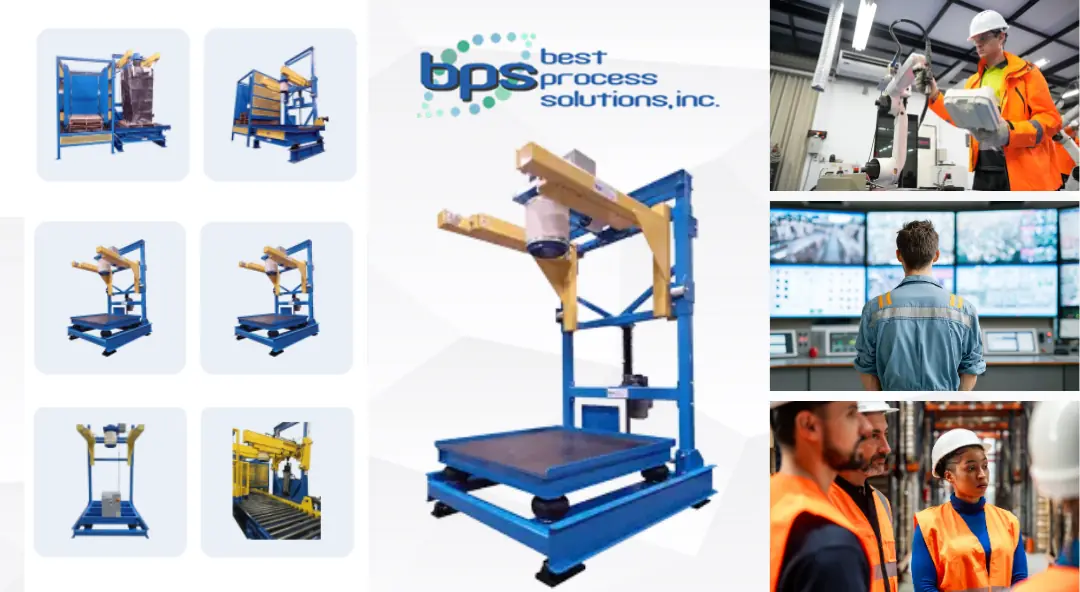
In the field of material handling, bulk bags—also known as jumbo bags, Jumbo Bags, super sacks, Super Sacks, big bags, Big Bags, Bulk bags, and Flexible Intermediate Bulk Containers (FIBCs)—are commonly used to transport and store large volumes of materials.
However, handling these bulk bags involves numerous dangers and hazards that demand consistent and careful attention from operators to ensure safety and adherence to FIBC handling precautions.
Serious risks include physical injuries from loading heavy materials into the bags, exposure to dust, and spills that can lead to injury risks, health hazards, or operational disruptions if not properly managed.
Best Process Solutions (BPS) offers engineered systems, such as the BFM Bulk Bag Loader with filling head, clamp systems, Clamp systems, inflatable filling heads, Inflatable filling heads, snap-fit connector, Seeflex polyurethane, filling frame, and pressure relief valve, to mitigate these hazards while also enhancing overall productivity, reducing maintenance costs, and improving warehouse safety with anchorage connectors and Safeguard Rigid Roof Anchors.
By incorporating ergonomic designs and automation features, theThe big risks in bulk bag handling are usually the same three every time: injuries from heavy lifting, respiratory issues from dust, and product loss from spills. Heavy lifting, dust, and spills can all be knocked down with a solid checklist and consistent FIBC handling precautions.
BPS’s engineered bulk bag lifting and emptying systems, dust control and collection systems, and automated loading and unloading systems are built to reduce these risks while meeting OSHA standards. Done right, safety work also cleans up the process: fewer messes, fewer stops, and less time fighting the same problems every shift.
In material handling, bulk bags are everywhere. You will also hear them called jumbo bags, Jumbo Bags, super sacks, Super Sacks, big bags, Big Bags, Bulk bags, and Flexible Intermediate Bulk Containers (FIBCs). Same idea: move and store a lot of material in one package.
They work, but they bring real hazards if the process is loose:
BPS addresses these issues with engineered systems that are designed for real plant conditions, not perfect lab setups. That includes equipment like bulk bag loading systems with filling heads, along with clamp systems, inflatable filling heads, snap-fit connectors, Seeflex polyurethane components, filling frames, and pressure relief valves and controls. For fall protection and safer work positioning, solutions can also incorporate anchorage connectors and Safeguard Rigid Roof Anchors where required.
The goal is practical: safer handling, cleaner operation, less downtime, and less maintenance drama.
If you are evaluating a BFM Bulk Bag Loader style setup, start with a bulk bag loading system and pair it with the right bulk bag filler and control systems for your material and facility constraints.
Bulk bag handling can push past Safe Working Load, strain lift loops, and set operators up for musculoskeletal injuries. Forklift pinch points add another layer of risk.
Where things go wrong most often:
What helps reduce the risk:
If your current workflow relies on improvised lifting and manual interventions, consider upgrading the process. This type of modernization is often the fastest path to fewer injuries and fewer stops, as highlighted in a bulk handling line upgrade case study.
Dust during bulk bag handling is not just a housekeeping issue. It can create respiratory hazards, and combustible dust can create explosion risk. Static hazards make that worse, which is why groundable bags matter in the right applications.
Dust and airborne fines show up across industries, including chemical processing, food handling, mining, and recycling. If you want industry-specific context, review chemical material handling considerations and sanitary handling for food and pharma.
What is at stake:
Dust control measures that move the needle:
These steps support OSHA requirements and protect long-term health. They also keep dust out of bearings, sensors, and transfer points, which helps uptime.
Spills cost money and create hazards. They also drive contamination risk, especially if an inner liner seal fails during handling.
Common causes:
The financial hit adds up. Spillage also creates hygiene and compliance problems. Contamination can compromise product integrity, especially in food processing environments. For related sanitary considerations, see sanitary vibratory conveyors for food and pharma.
When product flow is inconsistent, spillage often traces back to material characteristics. Use a bulk density guide to sanity-check flow expectations, fill rates, and downstream containment requirements.
Spill prevention that holds up on the floor:
A bulk bag safety checklist should be used for filling, unloading, and storage. It should also cover reuse if refurbished bags are allowed.
Core items to include:
A checklist only works if it is short enough to use and specific enough to catch real problems. Build it around how the line actually runs.
Pre-operation inspections for refurbished bulk bags start with bag integrity, equipment readiness, and confirming the weight rating for safe reuse. Material compatibility matters too.
Bag inspection steps:
Equipment checks to include:
Documentation matters:
If your process includes vibratory equipment upstream or downstream of bulk bag filling, include those systems in your pre-op checks as well. Start with understanding industrial vibratory technology, and keep your maintenance team aligned on replacing key components in vibratory machines.
Safe lifting in forklift operations starts with lift loops used within Safe Working Load limits and stable bag positioning.
Before the lift:
Key practices for forklift handling:
When the workflow supports it, reduce manual repositioning by using equipment that keeps bags and pallets aligned. Examples include turntables, pallet destackers, and conveyor options like roller conveyors, belt conveyors, and chain transfer conveyors.
Dust control is a system, not a single device. Protocols should address both airborne dust and static.
Controls that matter:
Supporting practices that keep the system working:
If you operate in high-dust environments, consider the downstream equipment as part of the dust plan. Conveying and screening choices can reduce uncontrolled drop points and help contain dust. Review bulk processing equipment and bulk processing conveyors for options that fit your layout.
Spillage prevention comes down to discharge spout control, inner liner integrity, and sealing.
Practical steps that reduce mess and contamination:
For filling:
Spillage is also affected by conveying and screening choices downstream. For bulk processing, review vibratory belt conveyors and vibratory screeners for bulk processing. In recycling environments, use vibratory screeners for recycling or a trommel to reduce fines buildup and uncontrolled spillage.
BPS solutions for bulk bags focus on the problem points that cause injuries and downtime:
BPS systems may incorporate clamp systems, inflatable filling heads, snap-fit connectors, and pressure relief and monitoring components. Depending on the line design, these systems are often paired with control systems and serviceable replacement parts to reduce unplanned downtime.
If you are planning a higher-throughput line, review scaling up high-capacity bagging facilities and batch vs continuous processing tradeoffs to align equipment choice with throughput, dust, and labor constraints.
Engineered lifters and dischargers help make lifting and discharge safer and more repeatable. For examples of unloader configurations, review the bulk bag unloader and discharger collection, including models such as Model BBD-4K, Model MTD 2.5K, and Model MTD 4K.
What these designs bring to the floor:
Safety features often include interlocks and emergency stops, along with compatibility with facility fall protection requirements where elevated access is unavoidable.
Operational flexibility is also part of the design. Modular bulk bag handling equipment supports faster changeovers for different bag sizes and materials, which helps productivity and reduces the temptation to bypass safety steps under time pressure.
Integrated dust control and ventilation systems capture airborne particles at bulk bag fill and unload points.
How the system typically works:
In bulk bag environments, this helps reduce inhalation risk for operators, prevent dust buildup on equipment, and support combustible dust expectations. For configuration references, use resources and brochures and manuals. For supporting utilities, review air systems.
Cleaner air also means fewer dust clogs and less unplanned maintenance. In recycling operations, where airborne dust and fines are common, pair dust controls with the right recycling equipment collection to reduce uncontrolled transfer points.
Secure, automated filling systems reduce risk during filling of Super Sacks, Big Bags, and Jumbo Bags.
Key components can include:
How these features reduce hazards:
For applications that start with open bags or require staged feeding before bulk bag filling, consider a bag dump station paired with controlled feeding options such as metering batch feeders or pan feeders.
Equipment does not replace training. It reduces exposure, but operators still need to recognize hazards and respond correctly when something starts to go wrong.
Strong programs include:
This is especially important in forklift-heavy environments where pinch points, unstable loads, and traffic risks stack up fast.
Hazard recognition and emergency response training gives operators the skills to spot risks early and act fast.
Training should cover:
Ways to make training stick:
Keep training materials and quick-reference guides accessible through resources and brochures and manuals.
PPE is the last layer, not the first. When it is selected correctly and maintained, it prevents a minor event from becoming a recordable injury.
Selection basics:
PPE maintenance checklist:
Compliance is not a binder on a shelf. It is a habit: hazard communication, inspections, training, and documented follow-through.
A workable compliance approach includes:
BPS equipment supports compliance by incorporating features aligned with regulatory expectations, helping reduce avoidable downtime. For product documentation and operating guidance, reference brochures and manuals and resources.
BPS equipment supports OSHA-aligned practices by building safety into the system design. Examples commonly built into bulk bag lines include:
If you want to map solutions to your specific market and material requirements, start at Industries Served.
Engineered equipment and automation can prevent common bulk bag handling accidents by managing the usual injury drivers: unstable loads, uncontrolled material flow, dust exposure, and pinch points.
Where engineered systems help most:
A safer process also supports the reuse of refurbished bulk bags where permitted, because handling and inspection become more consistent.
Engineered equipment reduces incidents by controlling two things that cause most problems: variability and exposure.
What the systems contribute:
If your bulk bag line connects to vibratory feeders, conveyors, or screeners, system tuning also matters. Review the role of resonance in efficient vibratory systems, multi-stage vibratory systems, and upgrading older equipment with modern vibratory motors for reliability and safety improvements that reduce emergency interventions.
Bulk bag handling does not have to be a rolling hazard. With the right checklist, consistent training, and engineered equipment, the three main risk areas (lifting, dust, and spillage) can be reduced while supporting hygiene and contamination control.
BPS solutions such as inflatable filling heads, dust-control practices, clamp systems, and engineered lifters turn manual, high-risk work into more repeatable operations that protect people and support compliance.
Next steps:
BPS solutions are positioned to improve safety and ROI by reducing incidents, downtime, and maintenance load through better bulk bag handling. Cleaner work areas, fewer urgent repairs, and less disruption to production schedules are the practical outcomes most teams notice first.
If the line is being expanded or reconfigured, pairing bulk bag systems with downstream bulk processing choices can further reduce rework and cleanup. Review bulk processing equipment and bulk processing conveyors for integration options.
If bulk bags are part of your daily work, start with the basics:
To discuss your current setup and equipment options, use the BPS contact page. You can also browse solutions by application on Industries Served.
Here are some common questions. Please contact us if you have a question we didn't answer.


.webp)