
Your cart is empty. Let's change that!
Shop our productsOops! Something went wrong while submitting the form.
.webp)
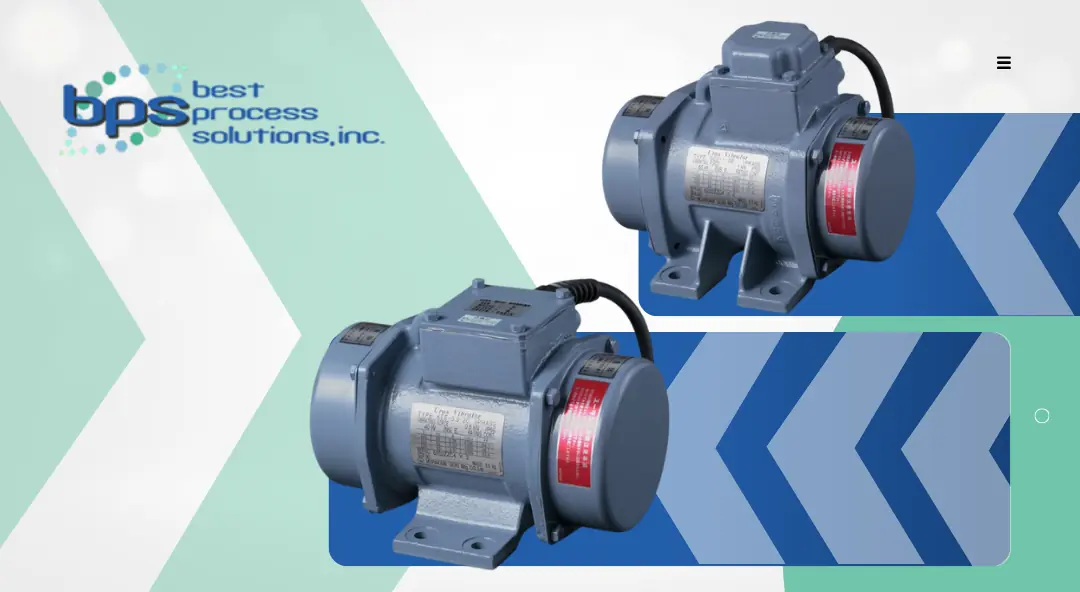
Vibratory motors come in two common flavors: single-phase and three-phase. The choice matters. It affects efficiency, uptime, maintenance load, and what you spend per ton handled, especially once the system is running day after day.
To pick the right motor, you need to understand how each type converts electrical power into controlled mechanical vibration, then match that to your load, duty cycle, environment, and the power you actually have available. This guide breaks down the differences in practical terms and shows how Best Process Solutions (BPS) helps you choose the right fit. For a deeper selection framework, see How to Choose the Right Motor for Your Vibratory Feeder and Upgrading Older Equipment With Modern Vibratory Motors.
Choosing the right vibratory motor directly impacts throughput, uptime, and total cost of ownership. The motor is what turns electrical energy into controlled vibration for feeding, conveying, compacting, and screening. Motor choice shows up everywhere BPS equipment is used, including Vibratory Feeders for Bulk Processing, Bulk Processing Conveyors, and Vibratory Tables.
BPS works across industries to match motor choice to real-world conditions like duty cycle, environment, and compliance requirements. See: Industries Served.
If the motor is mismatched, the line pays for it with unstable feed rates, overheating, nuisance trips, and a maintenance schedule that keeps getting moved up.
Single-phase vibratory motors are common in light-duty, lower-power applications. On BPS, single-phase options are organized under the Single Phase Vibrating Motors collection.
Single-phase motors drive offset masses to generate controlled oscillation. What gets tuned to the material is speed (frequency) and force (amplitude). In smaller hoppers, feeders, and compaction stations, this can deliver stable flow and gentler handling when the load and runtime stay within the motor’s comfort zone.
Examples of single-phase motor product pages in the sitemap include SEE 0.1, SEE 0.5, SEE 1, SEE 2, and SEE 3.5.
Three-phase motors are the workhorses of industrial vibration: efficient, durable, and better suited to high starting torque and steady operation under heavy load. Most three-phase options are organized under Industrial Vibrating Motors, including pole-count groupings such as Two Pole, 4 Pole, Six Pole, and Eight Pole.
Three-phase power creates balanced, rotating magnetic fields that deliver smoother torque and better efficiency. That is why three-phase is the typical choice for continuous-duty feeders, conveyors, and densification equipment.
Examples of three-phase motor product pages include KEE 0.5 (2-pole), KEE 3.5 (2-pole), KEE 6 (2-pole), KEE 9 (4-pole), KEE 18 (6-pole), and KEE 35 (8-pole).
Single-phase can be adequate for modest loads and intermittent duty. As loads increase and duty cycles lengthen, three-phase motors typically deliver better efficiency, stability, and lifespan.
Decision factor
Single-phase
Three-phase
Best fit
Light duty, intermittent run time
Heavy duty, continuous duty
Efficiency
Lower overall, especially as load rises
Typically higher, especially under load
Starting torque
Limited
Stronger, steadier starts under load
Heat handling
Less thermal headroom
Cooler operation in comparable duty
Scaling throughput
Often hits a ceiling
Built to scale with industrial demand
Power requirement
Single-phase supply
Three-phase service or engineered alternative
Three-phase generally wins for medium-to-heavy loads because it runs more efficiently and delivers smoother torque. The biggest gains show up when equipment runs long shifts, high loads, or both.
Key issues to watch:
If nuisance trips and heat are recurring, fix the electrical side before you keep swapping motors. Pair this with a daily maintenance routine like Daily Checklist to Keep Vibratory Equipment Running Smoothly (and implement the same inspection discipline described in Replacing Springs, Motors, and Key Components in Vibratory Machines).
ROI is not just purchase price.
Total ROI = purchase price + installation + energy + maintenance + uptime value
For many industrial users, efficient three-phase motors pay back through lower energy use and fewer interventions. BPS walks through these tradeoffs during an application review so you are not guessing.
Small, intermittent tasks may justify single-phase. As rate, mass, or runtime increase, three-phase typically lowers cost per ton handled. BPS helps size motors and controls to your actual duty curve, not a best-case assumption.
BPS designs feeders, conveyors, and tables as tuned systems where motor, mass, isolation, and controls are matched together. If your application involves feeding, start with Vibratory Feeders for Bulk Processing and related product pages like Electromagnetic Vibratory Feeder and Pan Feeders.
BPS motor selection support typically includes:
From food and chemicals to aggregates and recycling, BPS systems deliver stable flow, accurate feed, and long service life, backed by parts support via Replacement Parts and documentation in Brochures and Manuals.
When the job needs more than a catalog motor, BPS can provide:
Choosing between single-phase and three-phase vibratory motors comes down to matching power availability, efficiency needs, and durability requirements to your process. BPS helps you evaluate the tradeoffs and specify a motor-and-controls package that fits throughput, compliance, and ROI goals.
Ready to tune your motor selection to your process? Start here: Contact. Explore core BPS technologies: Vibratory Feeders, Bulk Processing Conveyors, Vibratory Tables.
Motor collections
Motor products
Related blogs
Equipment families
Resources
Here are some common questions. Please contact us if you have a question we didn't answer.


.webp)