
Your cart is empty. Let's change that!
Shop our productsOops! Something went wrong while submitting the form.
.webp)
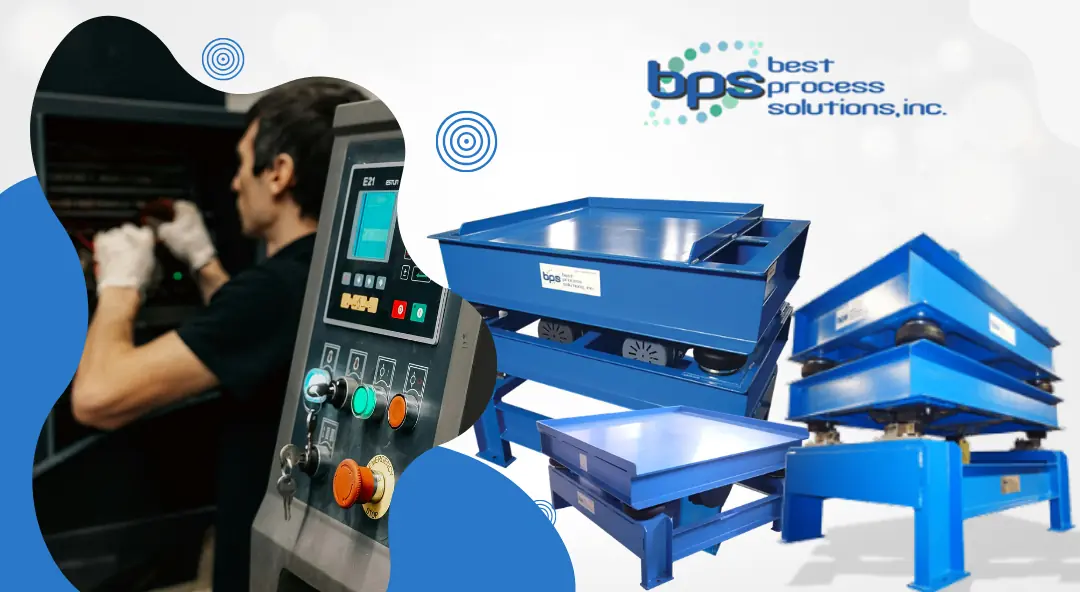
Compaction is one of those steps that gets skipped right until it costs you. Loose product means settling in storage, shifting loads in transit, broken pallets, inconsistent weights, and cleanup nobody has time for. Manual methods can help a little, but they are inconsistent by nature. Different operators, different effort, different results.
Vibratory tables solve that problem with controlled energy. They drive air out, tighten packing, and produce repeatable density across a load. That means stronger, safer loads for shipping and storage, and less time reworking what should have been right the first time. If you are comparing table types, start here: Flat Deck vs Grid Deck.
BPS offers multiple options depending on your material and packaging format, including Flat Deck Vibratory Tables, Grid Deck Vibratory Tables, and Light Duty Vibrating Tables (plus related Vibratory Tables collection).
This article breaks down the science behind compaction dynamics, why vibratory tables outperform manual methods, how BPS vibratory tables work, and where the ROI shows up in real operations.
Proper compaction is not just a construction concern. Any operation that fills containers, packs product, or ships bulk material benefits from predictable density and stable loads. If your process involves density targets, keep the Bulk Density Guide close because compaction and bulk density are tightly connected.
In construction and foundation work, compaction directly affects structural stability of concrete operations. Effective compaction methods reduce air voids. That improves soil densification and concrete properties, which drives load-bearing capacity for storage and shipping and supports compliance with engineering specifications.
Moisture content still matters. Proper compaction methods are valuable because they help achieve acceptable results even when conditions are not perfect, as long as you are working within the right operating window.
Compaction is a core process where density and stability decide how well a material performs under dynamic loading conditions. Good compaction improves stability under vibration and load, structural durability, compliance with standards, and repeatable outcomes across batches and loads.
On the plant side, the same concept applies. Better compaction means fewer surprises later, whether that later is a warehouse aisle, a truck bed, or a customer’s receiving dock. If you ship bags or containers downstream, consider pairing tables with Turntables or Bulk Processing Conveyors to keep handling consistent after compaction.
Improper compaction carries real risk and real cost. When compaction is weak, you tend to see settlement issues and rework, maintenance cost inflation, schedule slips from additional testing and repairs, and legal disputes when specs are missed.
Common risks from skipping or mishandling compaction include:
Compaction dynamics is the science of using mechanical vibration to reach a target density. Vibration changes how particles interact, reducing intergranular friction and allowing particles to settle into a tighter arrangement.
Engineers use compaction dynamics to pick methods that match the material type, desired density, and frequency and operational requirements. Understanding the science makes it easier to choose settings that work across real-world variability.
Compaction depends on internal friction and how much energy is required to move particles into a denser arrangement. Material type matters.
Different materials behave differently:
Manual compaction depends on human effort. That means inconsistency, fatigue, and variation across shifts. Vibratory compaction uses mechanical vibration to deliver controlled, repeatable energy.
Benefits operators typically see include:
BPS vibratory tables are designed to deliver consistent vibration for compaction. The goal is to improve density, reduce air voids, and produce repeatable results. For packaging-focused applications, see Designing a Tailor-Made Vibratory Table for Precision Packaging.
Vibratory tables apply controlled mechanical vibration with adjustable parameters that can improve densification and reduce air voids.
Core concepts that matter in operation:
Key parameters include:
BPS tables allow customizable settings for different materials. If you need help tying settings to upstream material variability, pair this topic with screening and feeder control resources like How BPS Equipment Maximizes Material Flow With Frequency and Amplitude and Calibration Methods for Consistent Vibratory Performance.
BPS vibratory tables support compaction quality, efficiency, and repeatability. They also make compaction trials more meaningful because the inputs can be controlled and repeated.
Better compaction typically shows up as:
A major advantage of vibratory tables is producing uniform density across materials by removing air voids and improving compaction behavior in granular materials and concrete.
Better compaction protects margins through efficiency. When compaction is faster and more consistent, operations see reduced labor cost, lower material waste, better schedule control, and less rework from missed specs.
BPS vibratory compaction solutions show up in industries that rely on consistent density and stable loads:
Vibratory compaction is widely used in construction and aggregates because it improves concrete properties and overall structural quality. If your materials are abrasive or heavy, consider the application fit of Grid Deck Vibratory Tables and downstream screening options under Vibratory Screeners for Bulk Processing.
In food and beverage processing, compaction improves consistency and supports quality control in bulk handling. Review BPS solutions for food applications and keep documentation accessible via Brochures and Manuals.
In pharmaceutical and chemical environments, controlled compaction supports material integrity and reduces contamination risk. For related plant-wide considerations, see the chemical industry page and the broader Industries Served overview.
For packaging, shipping, and logistics, compaction reduces volume, stabilizes loads, and improves transport safety. Tables are often paired with platforms and material movement hardware such as Custom Support Platforms and Roller Conveyors to keep ergonomics and flow consistent.
BPS is selected for compaction solutions because of proven reliability, custom-engineered systems designed for ROI, and long-term support.
Reliability shows up when the machine runs consistently and the crew is not fighting it daily. Durable components, stable mounts, and correct tuning reduce downtime and extend service life.
Custom engineering reduces mismatch and prevents buying equipment that is underpowered or oversized for the job. If you want a deeper technical foundation for tuning and resonance, review The Role of Resonance in Efficient Vibratory Systems and Understanding Industrial Vibratory Technology.
Long-term support matters because materials, packaging, and production demands change. When you need help, start with the Contact page.
Vibratory compaction improves density, consistency, and operational efficiency. It also reduces the risk and cost tied to improper compaction, including rework and failures.
Next steps:
Products
Collections
Blog posts
Resources
Here are some common questions. Please contact us if you have a question we didn't answer.


.webp)