
Your cart is empty. Let's change that!
Shop our productsOops! Something went wrong while submitting the form.
.webp)
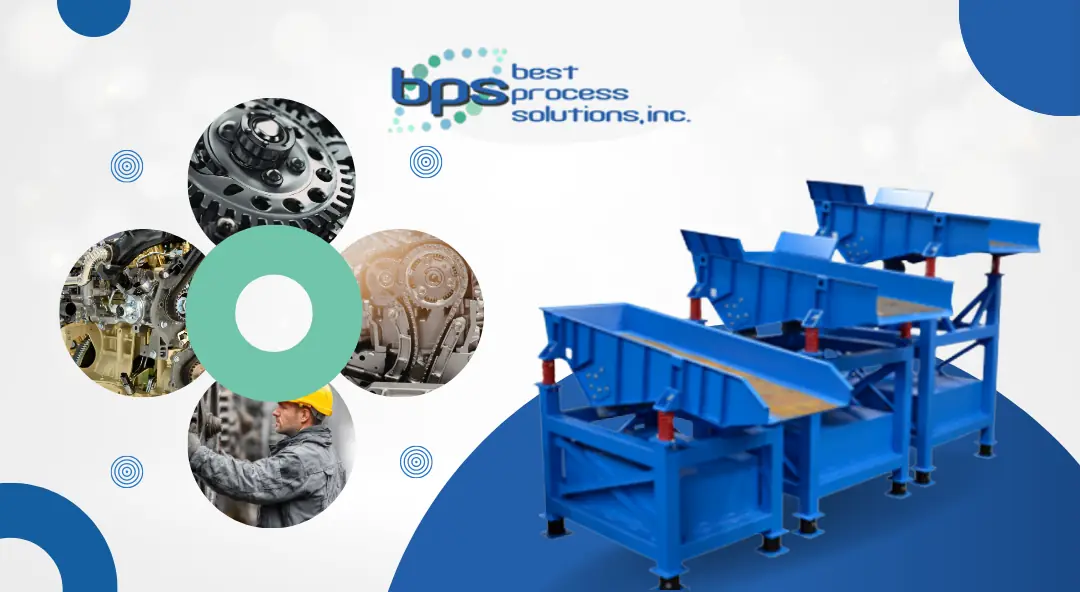
In the realm of industrial operations, the design of vibratory systems is essential for maintaining efficiency and maximizing return on investment (ROI). Even minor design errors can result in significant downtime, increased maintenance costs, and premature equipment failure. This article highlights common pitfalls, including improper motor sizing, inadequate structural support, ineffective dust control, and cable issues. More importantly, it discusses how BPS can assist in avoiding these costly mistakes, ensuring that systems operate at peak performance and have a longer lifespan, incorporating vibration isolation solutions and proper design.
In bulk plants, vibratory systems are rarely the “nice to have” equipment. They are the heartbeat of the line. When the design is right, material moves, screens separate, dust stays controlled, and tons per hour stays predictable.
When the design is wrong, even in small ways, you pay for it fast: downtime that blows up the schedule, higher maintenance costs, nuisance failures, and equipment that wears out early. This article covers the most common design mistakes, what they look like in real operation, and how BPS helps prevent them with proper design, vibration isolation solutions, and practical installation practices.
Vibratory systems live under load. They see continuous cyclic stress, shifting material conditions, and real plant constraints like tight layouts and rushed shutdown windows. If the design is off, the system may still run for a while, but it rarely runs well.
Bad design typically shows up as:
Design engineers and operators both benefit from understanding these failure drivers. Proper design, paired with sensible maintenance schedules and effective vibration isolation systems, protects equipment and helps keep operating costs under control.
The same mistakes show up again and again across feeders, screens, conveyors, and related vibratory equipment. The most common are:
Fixing these issues is not just “design polish.” It reduces mechanical failures, stabilizes performance, and improves overall efficiency through proper vibration control measures.
Improper motor sizing and selection can cripple a vibratory system. The system may run, but not in the range it needs to run. That leads to inefficiency, higher energy use, and more maintenance than anyone planned for.
Key factors that influence motor sizing include:
This matters in complex environments. The article calls out oil and gas as one example where optimal motor selection can impact drilling efficiency and equipment lifespan.
The practical point is simple: selecting the right motor improves system performance and reduces installation errors. For deeper selection support, reference How to Choose the Right Motor for Your Vibratory Feeder and browse the Industrial Vibrating Motors collection.
Related motor collections:
Poor structural support and alignment is a fast track to vibration problems, damaged equipment, and unreliable operation. Even a well-sized drive can be made miserable by a weak base, poor mounting, or misalignment that lets the machine fight its own structure.
Where it hits hardest:
When support and alignment are wrong, the effects ripple:
Structural support is not just “steel under the machine.” It is part of the vibratory system. When you need engineered base support, review Custom Support Platforms.
Incorrect frequency and amplitude settings can create resonance conditions that amplify vibration levels and lead to equipment failure.
If frequency and amplitude are not managed, you can see:
The relationship between frequency and amplitude needs to be understood and monitored. This is especially important when interpreting vibration survey data and making adjustments. For supporting context, see The Role of Resonance in Efficient Vibratory Systems, Calibration Methods for Consistent Vibratory Performance, and How BPS Equipment Maximizes Material Flow With Frequency and Amplitude.
Examples of what poor settings can cause in different sectors:
Tight control of frequency and amplitude improves reliability and extends equipment life. It also reduces the “mystery downtime” that comes from running on the edge of resonance.
Dust and containment issues often get treated like housekeeping. In many plants, they are a reliability problem.
Poor dust control can:
Best practices that reduce dust-related damage:
Dust control is also a safety issue. If your dust control is weak, your downtime and risk profile usually climb together. For industries where dust and hygiene requirements are strict, reference Food and Chemical. For spec sheets and equipment documentation, use Brochures and Manuals.
Material flow inefficiencies are a common cause of bottlenecks in vibratory systems. When flow is inconsistent, the whole line becomes unstable.
Drivers of flow inefficiency include poor chute geometry, poor interface design between equipment, and vibratory motion that does not match the material behavior.
Strategies that can improve flow:
The goal is steady flow without interruption. When flow is stable, throughput stabilizes and maintenance load drops. If you are troubleshooting flow variability, start with the Bulk Density Guide and review feeder motion options like Linear vs Circular Motion Feeders.
Design errors in vibratory systems do not stay isolated. They compound into downtime, higher costs, and poor reliability.
Design mistakes that reduce efficiency tend to increase operating costs. High vibration levels drive more frequent maintenance, and that hits everything from electric motors to equipment used in laboratories.
Common cost multipliers include:
Ways to reduce the risk of costly design errors:
Good design reduces vibration-driven maintenance. That improves efficiency and lowers cost over the equipment’s life. For common failure patterns and fixes, see Common Causes of Vibratory Feeder Failures and How to Fix Them.
Design mistakes often lead to increased maintenance and unexpected repairs. Over time, that compromises reliability and the useful life of the equipment.
Key countermeasures highlighted in the original content:
If you need a parts-focused maintenance checklist, use Replacing Springs, Motors, and Key Components in Vibratory Machines and keep spares aligned to the Replacement Parts collection.
Design mistakes can shorten equipment lifespan and increase downtime risk, which threatens operational continuity.
Mitigation strategies referenced in the original text include effective vibration control measures, vibration testing, isolator selection, regular maintenance schedules, and proper monitoring to predict and prevent failures.
A systematic approach to design and forecasting improves durability and keeps systems operating efficiently over longer service life. For modernization paths, see Upgrading Older Equipment With Modern Vibratory Motors.
BPS prevents common design mistakes by focusing on the fundamentals that keep vibratory systems stable:
The result is better performance and fewer reliability problems that show up after commissioning.
Motor sizing and application matching determine whether a system can operate reliably under varying loads. BPS supports this with an application-driven approach tied to equipment design.
Methodology for expert motor sizing and application matching
The approach includes evaluating:
Proper motor selection improves performance, reliability, and longevity. It also reduces installation errors that become recurring issues. Browse motor options in Industrial Vibrating Motors, including two-pole, 4-pole, six-pole, and eight-pole configurations.
BPS uses engineered structural support to strengthen durability and improve the effectiveness of vibration isolation systems. This directly addresses common design weaknesses.
The practical outcome remains the same across industries: stronger support reduces maintenance demand and improves reliability. If base structure is in scope, reference Custom Support Platforms and validate isolation with Shredder Isolation System.
Precision calibration is essential for keeping vibration systems within the right operating range. Without it, systems drift into inefficient operation, resonance risk increases, and equipment life shortens.
A structured calibration process includes:
This approach reduces resonance-related failures and strengthens overall vibration control strategy. For supporting content, use Resonance, Calibration Methods, and Material Flow With Frequency and Amplitude.
Dust control supports both performance and compliance. It also protects equipment from accelerated wear and reduces downtime.
Dust control is a process discipline. When it is managed consistently, system life improves and operating risk drops. In regulated or dust-sensitive operations, reference Food, Chemical, and the broader Industries Served pages.
Material flow design determines whether a vibratory system supports productivity or becomes a bottleneck.
For vibratory systems specifically, the practical goal is simple: keep material moving smoothly and predictably so the rest of the line stays stable.
For an end-to-end view, reference Multi-Stage Vibratory Systems, and consider feeder and conveyor options in Bulk Processing Equipment and Bulk Processing Conveyors.
BPS provides custom-engineered solutions built around operational needs, with a focus on vibration isolation systems and long-term ROI.
Custom-Engineered Solutions for Unique Needs
The process described in the original content includes consultations and stakeholder input, initial site surveys, use of analytical tools to guide design and evaluate performance, and testing phases that may include laboratory testing and in situ testing.
The idea is straightforward: fewer surprises, fewer outages, longer equipment life, and more stable production.
Design mistakes in vibratory systems can be expensive. They drive downtime, higher maintenance, and shortened service life. Getting design right improves performance and reliability across the equipment lifecycle.
Partnering with BPS gives businesses access to expert guidance and custom solutions designed to prevent these issues and support long-term performance.
If you are troubleshooting a persistent problem or building a new system, an application review can help avoid design mistakes that turn into downtime later. Contact BPS for next steps.
Here are some common questions. Please contact us if you have a question we didn't answer.


.webp)